
Trail shoe cushion is sold as a single dimension, with brands competing on stack height numbers like they were horsepower ratings. The reality is that more cushion isn’t always more comfort, and the wrong cushion can cost you stability on technical terrain.
This post covers how to think about cushion on trail (which is genuinely different from road), the cushion-by-distance framework I use when fitting runners, and six trail shoes that are genuinely cushioned and currently in stock at Backcountry.
If you’d rather skip to the matching, Build Your Fit Profile with Wayfinder. We ask about your distance, terrain, body weight, and injury history, then narrow the field to shoes with the right cushion-to-firmness combination for you. Five minutes, no measuring tape.
In this guide:
- How to Think About Cushion on Trail
- The Cushion-by-Distance Framework
- The 6 Best Cushioned Trail Running Shoes
- What Cushion Does NOT Fix
- The Wide-Feet Cushion Warning
- Rock Plates and Cushion: A Quick Note
- Putting It All Together
- Frequently Asked Questions
How to Think About Cushion on Trail
Trail cushion is best thought of as three variables, not one. Stack height tells you how much foam sits between your foot and the ground. Midsole firmness tells you how much of that foam is actually working under load. Ground feel tells you what you lose as stack increases. The right shoe has the cushion-to-firmness combination that matches your weight, distance, and terrain.
Most “best cushioned” lists rank by stack height alone and call it a day. That misses the point. A 35mm shoe with extremely soft foam can bottom out under a heavier runner and feel less protective than a 28mm shoe with firm foam.
The variables that actually predict comfort:
- Stack height: the foam thickness, usually 22mm to 38mm in trail shoes
- Midsole firmness: usually expressed by foam type (EVA, PEBA, supercritical) and how it feels under hand pressure
- Ground feel: what you can sense through the shoe, which decreases as stack increases
- Body weight: heavier runners compress foam more, which changes effective stack
- Distance: short runs reward feel, long runs reward fatigue protection
The Cushion-by-Distance Framework
Cushion need scales with distance and body weight, not preference. Runners typically running under 10 miles benefit most from 22 to 27mm of stack, where ground feel matters more than fatigue protection. Runners covering 10 to 25 miles do well in 27 to 32mm. Ultramarathon runners and heavier runners benefit most from 32mm or more, where the fatigue protection over long efforts outweighs the loss of ground feedback. Admittedly, some of this is personal preference and how the stack feels for you running on your typical terrain at your typical distances.
| Run Distance | Stack Height Range | Why |
|---|---|---|
| Under 10 miles | 22 to 27mm | Ground feel beats cushion at short distances |
| 10 to 25 miles | 27 to 32mm | Balance of protection and feel |
| 25+ miles or ultras | 32mm or higher | Fatigue protection outweighs feel concerns |
| Any distance, 180lb+ runner | 30mm or higher | Higher body weight requires more cushion at equivalent effort |
Two things this table doesn’t capture. First, technical terrain shifts the answer down a notch. A 32mm shoe on rooty, rocky, or otherwise technical descents will likely feel tippy compared to the same shoe on a fire road, even at the same distance. Second, drop interacts with cushion. A 33mm shoe with zero drop (like the Altra Olympus 6) feels different from a 28mm shoe with 8mm drop, even though both are technically “cushioned.”
The 6 Best Cushioned Trail Running Shoes
The six picks below are all genuinely cushioned (27mm or higher), inventory-verified at Backcountry, and chosen for distinct use cases. Each entry covers stack height, drop, current price, who the shoe fits best, and the trade-offs that come with the design choices. The lineup deliberately spans zero-drop and traditional-drop options, with a price range from $149.95 to $184.95.
1. Altra Olympus 6: Best Max Cushion + Zero Drop
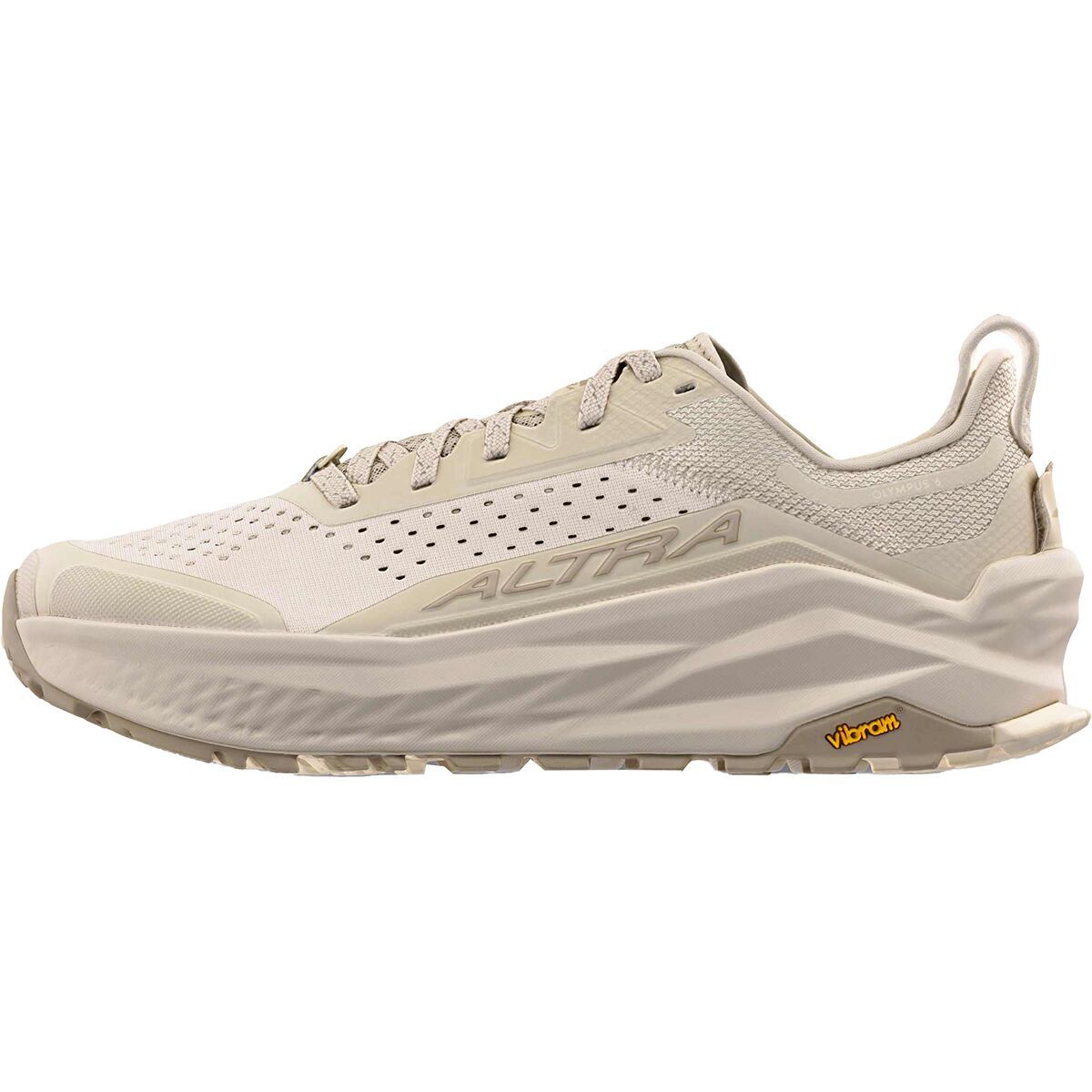
Stack height: 33mm
Drop: 0mm
Price: $174.95 to $184.95 at Backcountry
Best for: Zero-drop runners doing long distances, runners who want Altra’s foot-shaped last with maximum stack
The Olympus is Altra’s high-stack trail shoe, sitting on the brand’s foot-shaped last with a 33mm cushioned platform. If you’re committed to zero drop and you want fatigue protection on long efforts, this is the obvious answer.
The trade-off is technical terrain feel. At 33mm of zero-drop stack, the shoe sits tall, which can feel tippy on off-camber descents. If most of your running is rolling fire road or moderate singletrack, this is fine. If you’re running rooty rocky technical trail at speed, the Lone Peak 9 (lower stack, same foot shape) is the better fit.
Skip it if: You’re new to zero drop or run primarily technical singletrack where ground feel matters more than fatigue protection.
2. Saucony Xodus Ultra 4: Best Max Cushion (Traditional Drop)
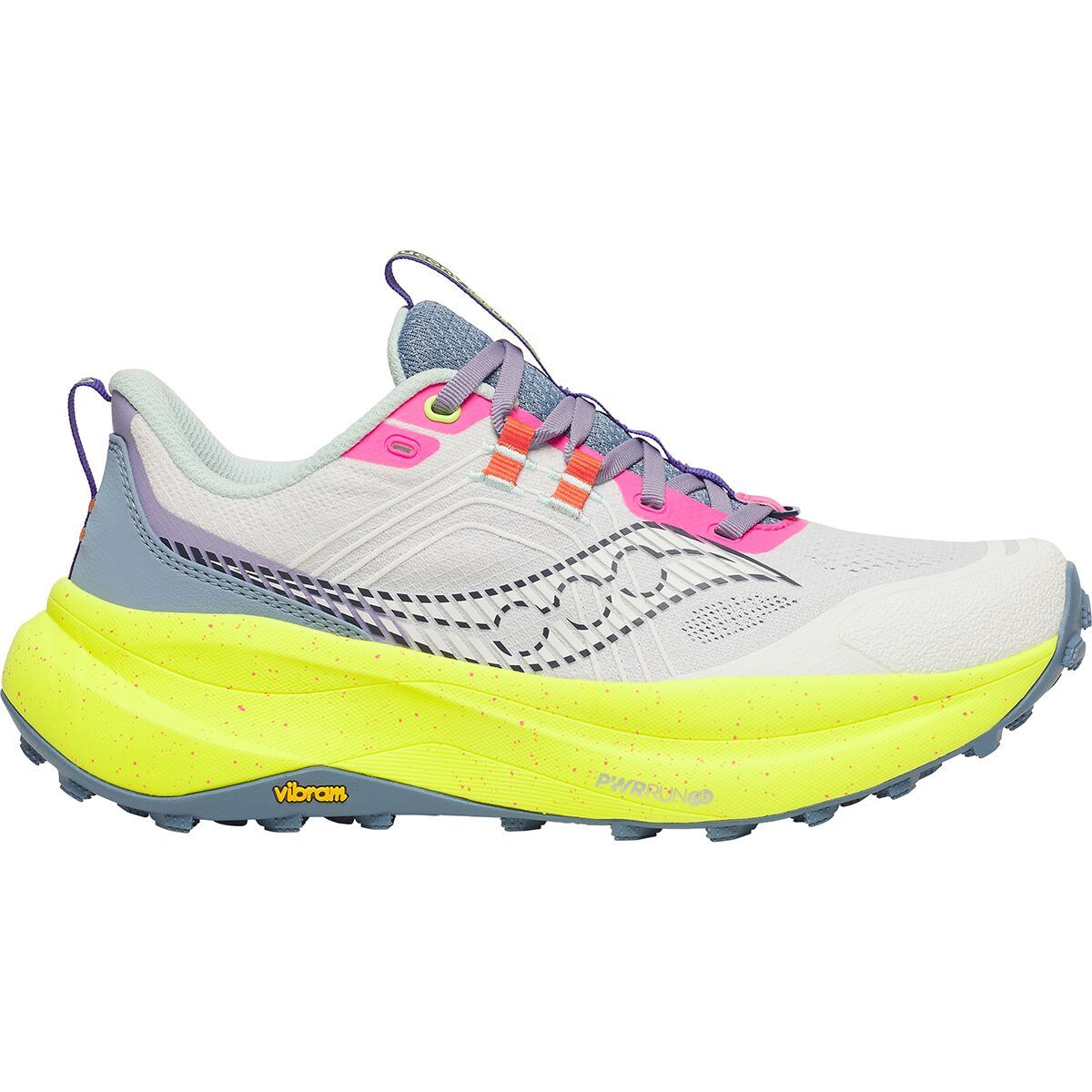
Stack height: 32mm heel / 26mm forefoot
Drop: 6mm
Price: $169.95 at Backcountry
Best for: Long-distance runners who want max cushion without zero drop, runners coming from HOKA looking for an alternative
The Xodus Ultra 4 is the natural HOKA Speedgoat alternative for runners who want maximum stack at a moderate drop. PEBA-based foam, aggressive lug pattern, and a wider toe box than older Saucony trail shoes make this a strong all-rounder for ultras and long training runs.
The 6mm drop is a comfortable middle ground. Runners coming from road shoes won’t feel disoriented by the geometry, and runners coming down from 8 or 10mm trail shoes will adapt without drama. The shoe runs slightly soft, which heavier runners (over 200 lbs) may find compresses more than they want on long descents.
Skip it if: You need a wider toe box than standard. The Xodus runs slightly narrow compared to Altra and Topo wide options.
3. Topo Athletic Ultraventure 4 Wide: Best Cushion + Wide Feet
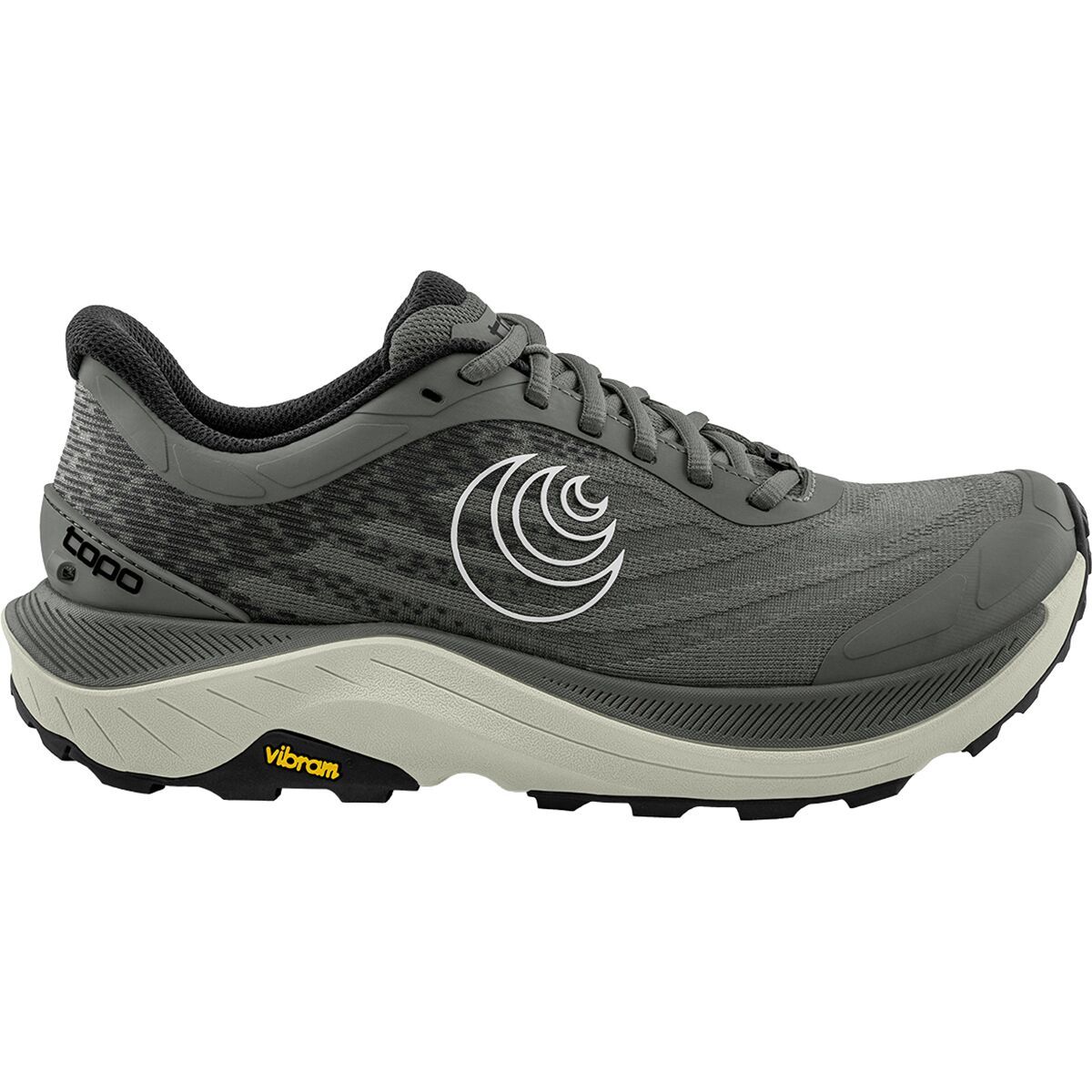
Stack height: 30mm heel / 25mm forefoot
Drop: 5mm
Price: $155.00 at Backcountry
Best for: Wide-footed runners who want max cushion, runners who like the foot-shaped last but don’t want zero drop
The Ultraventure 4 sits in a sweet spot: foot-shaped last for genuine wide-foot accommodation, 5mm drop for runners who want some heel-to-toe differential, and 30mm of stack for long-day comfort. The wide version (in stock at Backcountry) reaches roughly 104mm at the forefoot, which covers most extra-wide foot shapes.
For wide-footed runners who feel cramped in standard-last cushioned shoes (like the Saucony Xodus or HOKA), this is the answer. The trade-off is the same as any high-stack shoe: less ground feedback on technical terrain. For ultra distances on rolling singletrack and fire roads, that trade-off is worth it.
Skip it if: You have narrow or normal-width feet. The wide last won’t pinch, but the volume will feel sloppy.
4. Salomon Ultra Glide 4: Best for Ultras

Stack height: 32mm heel / 26mm forefoot
Drop: 6mm
Price: $159.95 at Backcountry
Best for: Ultra distances, dry-to-mixed terrain, runners who like Salomon’s ride and durability
Most Salomon trail shoes run narrow, but the Ultra Glide 4 is the exception. It’s the brand’s max-cushion ultra-distance shoe, with a 32mm stack and a 6mm drop that makes it accessible to runners coming down from higher-drop training shoes.
The forefoot is roomier than typical Salomon (around 99 to 100mm vs. the brand’s typical 95mm) but still narrower than Altra or Topo wide options. If your wide is on the milder side and you want the precision and durability that Salomon is known for, this works. If your forefoot exceeds 102mm, you’ll feel constrictive at mile 30.
Skip it if: Your forefoot is over 102mm or you’re running mud or wet technical terrain regularly. The outsole is tuned for dry-to-mixed conditions.
5. Brooks Cascadia 19: Best Versatile Cushion

Stack height: 28mm heel / 20mm forefoot
Drop: 8mm
Price: $149.95 at Backcountry ($179.95 for the GTX waterproof version)
Best for: Mixed terrain, runners coming from road, runners with Achilles or plantar fascia history (the higher drop helps)
The Cascadia is the longest-running trail model in the Brooks lineup, and the 19th iteration delivers what you’d expect: reliable cushion, durable upper, versatile outsole. The 8mm drop is the highest in this list, which has the potential to ease load on Achilles and plantar fascia compared to lower-drop options.
It’s not a max-cushion shoe by 2026 standards. The 28mm heel stack puts it in the moderate range, well-suited to mixed-terrain runners doing 10 to 20 miles at a time. For longer ultra distances, the higher-stack options above will protect your legs better.
Skip it if: You’re chasing maximum stack for ultra distances. The Cascadia’s strength is versatility, not max cushion.
6. Altra Timp 5 Boa: Best Mid-Cushion Zero Drop
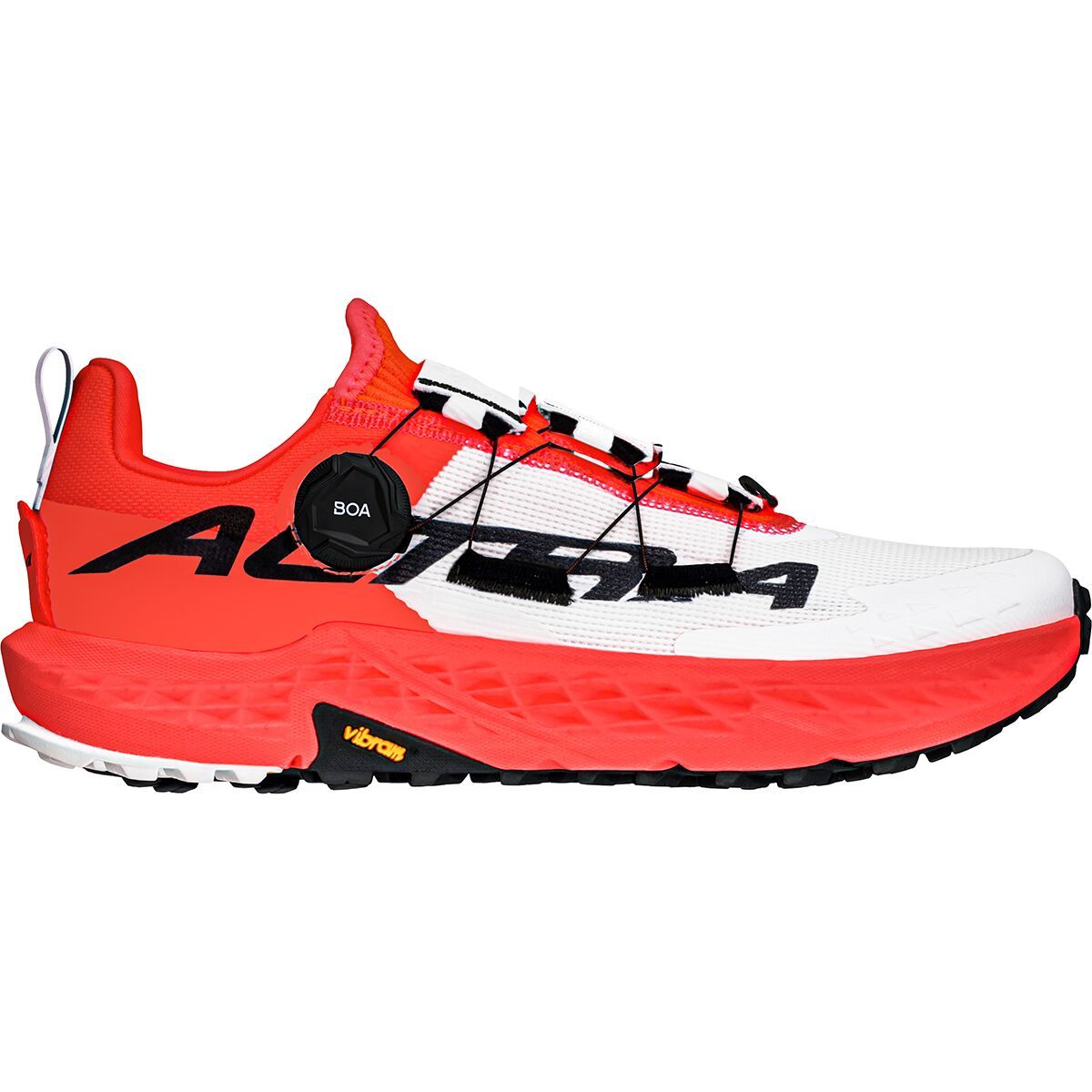
Stack height: 29mm
Drop: 0mm
Price: $174.95 at Backcountry
Best for: Zero-drop runners who want cushion but not max stack, technical trail at moderate distances
The Timp sits between the Lone Peak (lower stack, more ground feel) and the Olympus (max stack, more fatigue protection). For zero-drop runners who run technical terrain and want cushion that doesn’t feel tippy, this is the middle option.
The Boa lacing system is worth a note. It cinches the midfoot quickly and consistently, which is useful if your foot tends to slide on descents. It’s also a single point of failure: if the Boa wire breaks 20 miles into a long run, the field repair is harder than relacing traditional eyelets. For most users this isn’t a real risk, but it’s worth knowing.
Skip it if: You prefer traditional laces or want max stack for ultra distances.
What Cushion Does NOT Fix
Maximum cushion is often pitched as a fix for problems it doesn’t actually solve. If your shoe is the wrong width, more foam underfoot won’t help. If your drop is wrong for your injury history, the cushion won’t compensate. If you’re sized incorrectly, no amount of stack will save your toenails.
Cushion fixes:
- Joint fatigue on long efforts
- Impact stress for heavier runners
- Recovery comfort after hard training
Cushion does not fix:
- Width mismatch (a too-narrow shoe with more cushion is still too narrow)
- Wrong drop for your injury history (an 8mm Achilles need is not solved by a 4mm shoe with more stack)
- Sizing errors (length problems are not cushion problems)
- Lacing or fit issues at the heel or midfoot
The Wide-Feet Cushion Warning
Wide-footed runners often gravitate toward maximally cushioned shoes for the wrong reason. Soft foam under a wide foot can compress asymmetrically, which has the potential to lead to lateral instability on uneven terrain. The fix isn’t to avoid cushion, but to match cushion firmness to foot width.
If you have wide feet and want a cushioned trail shoe, prioritize firm midsole foams over plush ones. The Topo Ultraventure 4 Wide and the Altra Olympus 6 both balance cushion with sufficient firmness for stability under wider feet. Avoid the softest maximalist shoes (some HOKA models, the softest Saucony foams) if your forefoot exceeds 102mm.
For deeper coverage on width-specific picks, see our spoke post on best trail running shoes for wide feet.
Rock Plates and Cushion: A Quick Note
Rock plates and cushion solve different problems. A rock plate is a thin layer of rigid material in the midsole that protects against pointy rocks and roots without adding stack. Cushion absorbs broad impact across the whole foot. The two stack additively: a shoe with both a rock plate and high cushion gives you protection from underfoot hazards plus fatigue protection over distance.
For technical mountain terrain (think Mt. Tam, the Sierra, the Wasatch) the combination matters. The Brooks Cascadia 19 has a Ballistic Rock Shield. The Topo Ultraventure 4 has a rock plate. Most Altras (including the Olympus 6 and Lone Peak 9) include some form of rock protection.
If you run primarily smooth terrain (rolling fire road, manicured singletrack) the rock plate is a nice-to-have. If you run technical terrain with exposed rocks, it’s closer to a must-have.
Putting It All Together
Cushion is the most personal variable in trail shoe selection. It interacts with body weight, running distance, terrain technicality, drop preference, and foot width. There’s no universal “best cushioned” shoe because the right answer changes based on which combination of those variables describes you.
The framework I’d use: start with your distance and body weight to find your stack height range. Cross-reference against your injury history to set the drop range. Layer in your foot width to filter brands. The shoes that pass all three filters are your short list.
For the bigger picture on how cushion fits with the other decisions, see our hub post on how to choose trail running shoes. For drop specifically, see our post on heel-to-toe drop in trail running shoes.
Your Digital Trail Bootfitter
The right cushion. Not just the most.
Your Wayfinder fit profile factors distance, weight, terrain, drop preference, and injury history into the cushion recommendation. You answer questions, we hand you a short list with live Backcountry availability.
Build Your Fit ProfileFrequently Asked Questions
The Altra Olympus 6 has the highest stack at 33mm with a zero-drop platform. The Saucony Xodus Ultra 4 and Salomon Ultra Glide 4 both sit at 32mm of heel stack with traditional drops (6mm). For most runners, the differences between 30mm and 33mm of stack are smaller than the differences between drop ranges, foot width, and midsole firmness.
Stack height should match distance and body weight. Under 10 miles, 22 to 27mm is enough and ground feel matters more than cushion. Between 10 and 25 miles, 27 to 32mm balances protection and feel. For ultras (25 miles or more) and runners over 180 lbs, 30mm or higher is the right starting range. Technical terrain shifts this down a notch.
Generally yes, but with one caveat. Max-cushion shoes reduce impact and forgive form mistakes that beginners commonly make. The caveat is technical terrain. If you’re new to trail and running rooty technical singletrack, very high stack can feel unstable and may contribute to twisted ankles. A moderate-cushion shoe (around 28mm) is a safer starting point for technical trail beginners.
They work, but with reduced ground feel and some loss of agility on rooty rocky terrain. Maximum stack shoes elevate your foot, which makes off-camber surfaces feel less stable than a lower-stack shoe. Many experienced runners run two pairs: a lower-stack shoe for technical days and a high-cushion shoe for long efforts on smoother terrain.
The fit profile asks about your typical distance, terrain mix, body weight category, and injury history. The engine then matches you to the cushion-to-firmness combination that fits all four. For experienced runners, we also surface direct stack height preferences. For beginners, we infer from distance and terrain rather than asking for technical specs they wouldn’t know.
No. More cushion comes with trade-offs in ground feel, stability, and weight. For short technical runs, less is often better. For long fatigue-driven days, more is usually better. The right answer depends on which trade-off matters more for your specific use case.