
If you have flat feet and you have shopped for trail shoes, you have heard the same advice everywhere: “get stability shoes.” It sounds authoritative. It is also incomplete, and on technical trail it can steer you wrong. Stability is a road running concept built around controlling motion on predictable pavement. Trail is not predictable, and your flat foot needs something more specific than a category label.
Once you stop thinking in categories and start thinking in three specific fit signals, choosing a trail shoe for flat feet gets a lot simpler. You can also answer a few questions about your arch and how you run and let us narrow the field for you.
In This Guide
- What flat feet actually means
- What flat-footed trail runners actually need
- How to measure your arch at home
- Shoe recommendations by flat-foot severity
- The footbed question
- What overpronation means on trail
- FAQ
What Does “Flat Feet” Actually Mean?
Flat feet means your arch sits lower than average, so more of your sole contacts the ground when you stand. It exists on a spectrum, from a slightly low arch with no symptoms to a fully collapsed arch that fatigues quickly under load. Where you fall on that spectrum matters more than the label itself, because a mild low arch and a severe collapse call for very different shoes.
A flat arch is an anatomy signal, not a motion signal. Plenty of flat-footed runners have neutral motion, and plenty of normal-arched runners overpronate. They are two separate things, and treating them as the same is exactly why so much shoe advice misses. On trail, this distinction gets even more important, because the surface itself does some of the work a “motion control” shoe is trying to do.
What Do Flat-Footed Trail Runners Actually Need?
Flat-footed trail runners need three things: a shoe with enough midfoot volume to accommodate a low arch, a firm enough midsole to resist further collapse under load, and a footbed with mild arch support. Many trail shoes ship with relatively flat insoles not designed for low arches. An aftermarket footbed like Superfeet Green or Currex TrailPro often solves the problem without requiring a specialty stability shoe.
Let me break down why each of those three matters, because the “why” is what lets you read a spec sheet and make your own call:
- Midfoot volume. A collapsed arch tends to spread and lengthen the foot, so it needs more room through the middle of the shoe, not just the toe box. Many trail shoes are built on a neutral-arch last that feels tight across the midfoot for a flat foot. Higher-volume lasts (think Topo, Altra) breathe better here.
- Midsole firmness. This is the one people get backwards. A soft, plush foam feels great in the store, but under a foot that already wants to roll inward, soft foam lets it roll further. A firmer midsole gives the foot a stable platform and can reduce fatigue over long miles. Firmer is often better for flat feet, not softer.
- Mild arch support. Notice the word “mild.” Flat feet do not usually need an aggressive medial post or a motion-control device. Those tend to overcorrect and create new problems. A footbed with gentle, structured support under the arch does the job for most runners.
How Do You Measure Your Arch at Home?
The quickest way to gauge your arch height is the wet footprint test. Wet the sole of your foot, step onto a piece of paper or a dry concrete floor, and look at the print. It takes about thirty seconds and tells you most of what you need to know.
- Flat / low arch: you see a full, filled-in print with little or no inward curve. The whole sole shows up.
- Normal arch: a clear curve along the inner edge, with a solid band connecting heel and forefoot.
- High arch: a thin outer band with a large gap in the middle, sometimes the heel and forefoot barely connect.
Here is the honest caveat: the wet test is a rough guide, not a diagnosis. It tells you roughly where you sit on the spectrum. If you want to fold in how you actually run, where you run, and any injury history, that is where a fuller fit profile beats a single test. This is a fit guide, not a medical tool, so if your arch causes real pain, see a professional.
Which Trail Shoes Work for Flat Feet?
There is no single “best shoe for flat feet,” because the right pick depends on how low your arch is and whether you have any pain. Here is the framework, then specific in-stock options for each level. All prices and availability were verified at Backcountry at the time of writing.
| Flat-foot level | What to look for | Approach |
|---|---|---|
| Mild (slightly low arch, no pain) | Standard volume shoe plus a supportive aftermarket footbed | Most neutral trail shoes work; upgrade the insole |
| Moderate (low arch, some fatigue) | Higher-volume last, firmer midsole, structured footbed | Choose the shoe for volume and firmness first |
| Severe (fully flat, pain or fast fatigue) | Gait check plus a custom or premium footbed in a well-fitting shoe | Get assessed; the footbed matters more than the shoe model |
La Sportiva Akasha II: firm platform for higher mileage
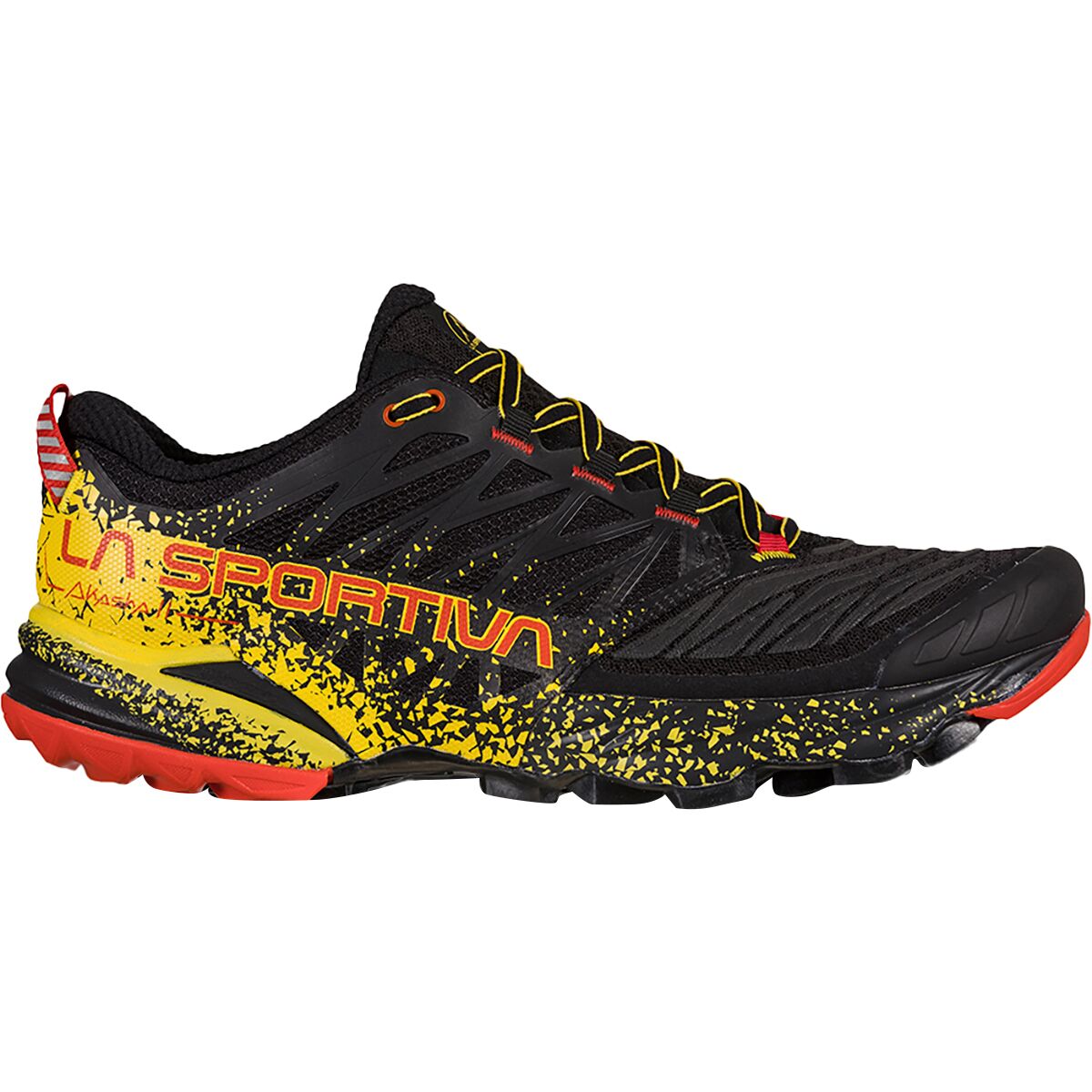
La Sportiva Akasha II
6mm drop · 29/23mm stack · standard volume · moderate stability · 4.7 stars (165 reviews)
A stable, well-cushioned ultra-distance shoe with a supportive platform that resists collapse over long efforts. A strong choice for moderate flat feet logging real miles, especially paired with a structured footbed.
Check price at Backcountry · $195Brooks Cascadia 19: stable and protective on technical ground

Brooks Cascadia 19
6mm drop · 35/29mm stack · standard volume · high stability · 4.7 stars (950 reviews)
The Cascadia is built around a stable, structured platform that holds the foot steady on uneven ground. That inherent stability is a natural fit for a flat foot that wants support without an aggressive corrective device.
Check price at Backcountry · $149.95Topo Athletic Ultraventure 4 Wide: room for a foot that spreads
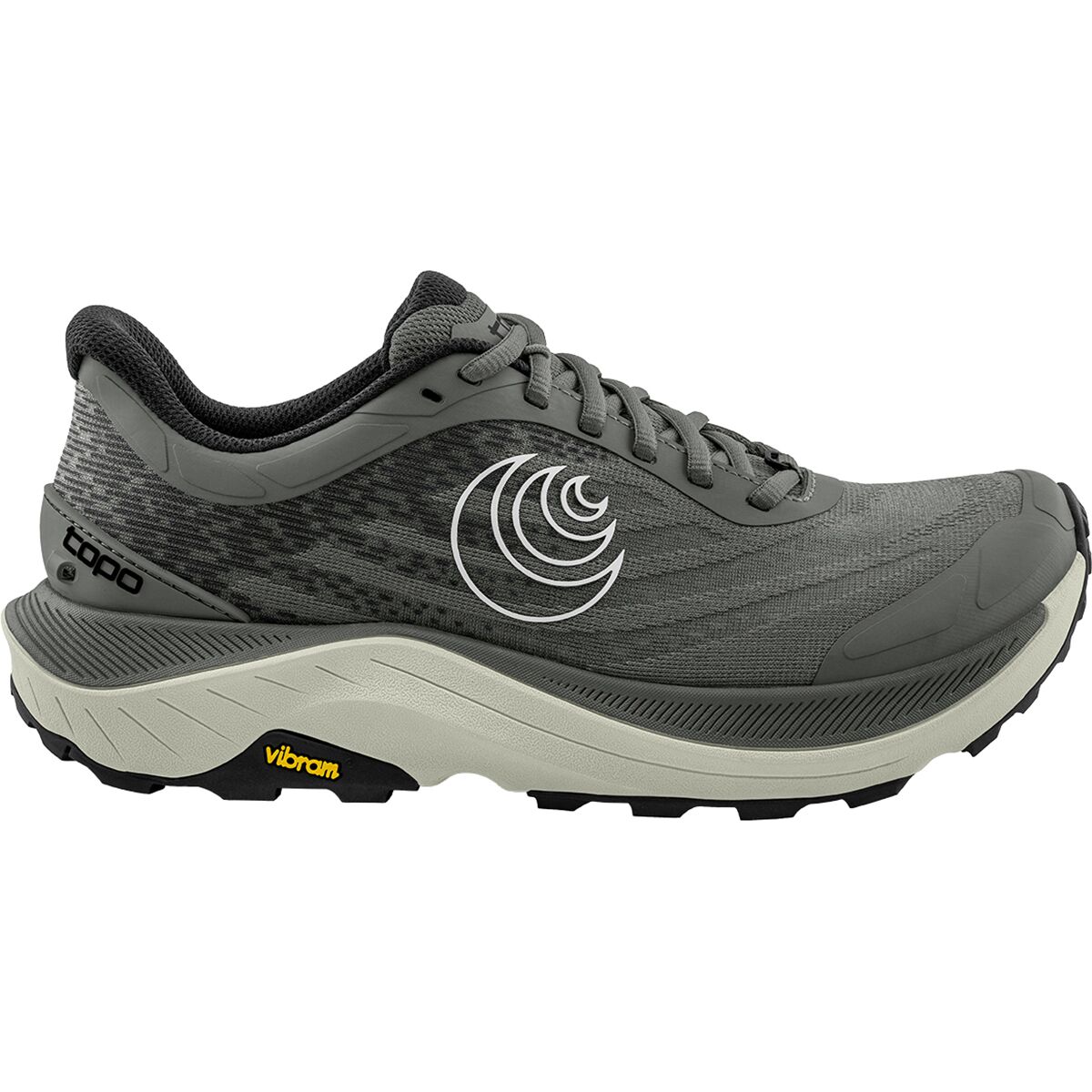
Topo Athletic Ultraventure 4 Wide
5mm drop · 35/30mm stack · wide volume · moderate stability · 4.6 stars (240 reviews)
Topo builds on a roomy, anatomical last that gives a spread, flat foot the midfoot volume it needs. The wide version adds even more room. A natural pick if standard trail shoes feel tight through the middle.
Check price at Backcountry · $155Saucony Peregrine 16: a grippy, stable option to pair with a footbed
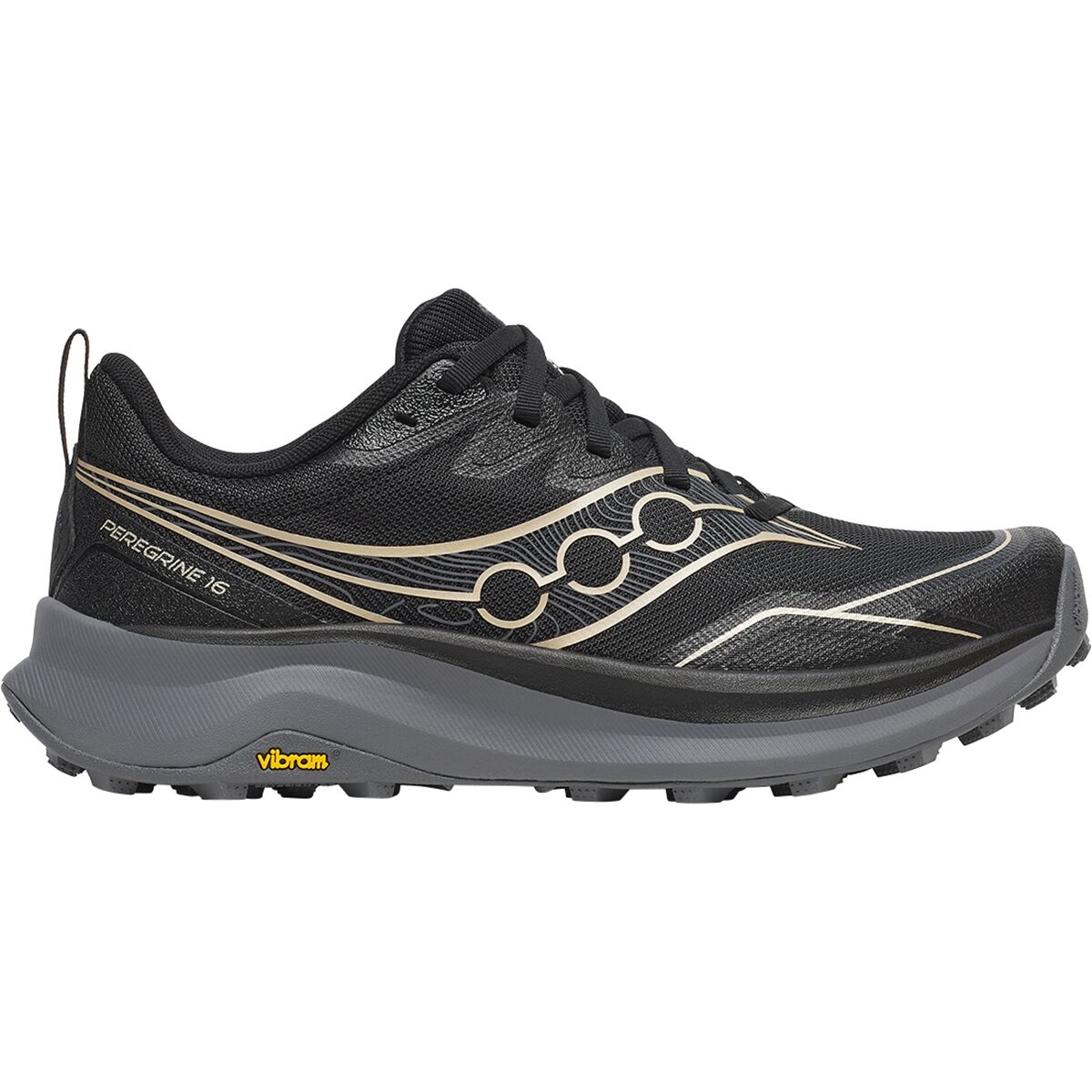
Saucony Peregrine 16
4mm drop · 32/28mm stack · standard volume · high stability · 4.7 stars (780 reviews)
A do-everything trail shoe with a stable feel and aggressive grip. The standard insole is flat, so this is a good candidate to pair with a supportive aftermarket footbed if your arch is on the lower side.
Check price at Backcountry · $149.95A note on Altra: the brand’s foot-shaped last and zero drop can be excellent for some flat-footed runners, because the wide platform and natural posture build intrinsic foot strength over time. For others, the lack of any built-in arch support and the demand of zero drop is too much, too soon. If you are curious about that route, start short and add a footbed, do not jump straight to long runs.
When Does a Footbed Beat a “Stability” Shoe?
Often. Here is the pattern I see again and again: a runner buys a heavily corrective “motion control” shoe, the correction is too aggressive, and they end up with new aches. Meanwhile, a well-fitting neutral shoe plus a structured aftermarket footbed (Superfeet Green and Currex TrailPro are the common picks) gives the foot mild, appropriate support without forcing it into a position it does not want.
The footbed approach also has a practical advantage: you can move it between shoes. Buy one good footbed, and it supports your arch across your whole rotation. For severe flat feet with pain or rapid fatigue, a custom orthotic is genuinely worth the cost, and I will not pretend otherwise. Footwear alone has limits.
What Does Overpronation Mean on Technical Trail?
On road, overpronation is treated as a problem to control. On trail, some pronation is actually useful, because the foot needs to adapt to rocks, roots, and off-camber ground. A trail surface is uneven by nature, so a shoe that rigidly locks your foot into one plane can feel worse than one that lets your foot move and respond.
This is the reframe I want you to take away: flat feet on trail do not need maximum control. They need enough volume to fit comfortably, enough firmness to resist collapse under load, and mild support to keep the arch from working overtime. Get those three right and the “stability category” question mostly disappears. There is also an upside worth knowing: trail running tends to strengthen the foot over time, and many flat-footed runners see their arch develop as the small stabilizing muscles get stronger.
Your Digital Bootfitter
Stop shopping by category. Start shopping by your foot.
Wayfinder was built on bootfitting methodology: we ask about your arch, your running, and your injury history, then match you to trail shoes with the right volume and support combination. No guessing which “stability” label applies to you.
Build Your Fit ProfileFrequently Asked Questions
Not necessarily. Flat feet need enough midfoot volume, a firm enough midsole to resist collapse, and mild arch support. A neutral shoe with a structured footbed often works better than a heavily corrective “motion control” shoe, which can overcorrect and create new problems.
Firmer is usually better. Soft, plush foam lets a flat foot roll inward further under load, which can increase fatigue. A firmer midsole gives the foot a stable platform, which is why many flat-footed runners feel more supported in a firmer shoe over long miles.
Yes. Many flat-footed runners do high mileage on trail comfortably. Trail surfaces are softer and more varied than pavement, and trail running tends to strengthen the foot over time. The key is a shoe with the right volume and firmness, plus a supportive footbed if needed.
For mild to moderate flat feet, a structured footbed like Superfeet Green or Currex TrailPro often solves the support gap without a specialty shoe, and it moves between pairs. For severe flat feet with pain or rapid fatigue, a custom orthotic is worth the investment.
Some pronation is useful on trail, because the foot needs to adapt to uneven ground. Unlike road running, where overpronation is controlled aggressively, trail running benefits from a shoe that allows the foot to respond to terrain rather than locking it rigidly in place.
For some runners, yes. The wide, foot-shaped platform builds intrinsic foot strength over time, which can help a flat foot. For others, the lack of built-in arch support and the demands of zero drop are too much at once. Transition gradually and consider adding a footbed.