
f you’ve ever spent a ski day counting the minutes until you could unbuckle your boots, you’re not alone. Wide-footed skiers have been cramming their feet into narrow shells for decades, suffering through numbness, pressure points, and that particular agony of a sixth toe bone that doesn’t exist but somehow hurts anyway.
The good news is that boot manufacturers have finally figured out that feet come in different shapes. The bad news: “wide” means different things to different brands, and finding the right fit still requires understanding what you’re actually shopping for.
In this guide:
- What “Wide” Actually Means in Ski Boots
- Signs You Actually Need a Wide Boot
- The Challenge of Buying Wide Boots Online
- Best Wide Ski Boots for Women
- Best Wide All-Mountain Ski Boots
- Wider Options in Touring Boots
- Understanding Your Options: Width vs. Volume
- The Custom Insole Factor
- Shell Modification: When Width Isn’t Enough
- How to Know What You Need
- Key Takeaways
- Related Reading
What “Wide” Actually Means in Ski Boots
Ski boot width is measured at the forefoot, across the ball of your foot. This measurement is called the “last,” and it’s expressed in millimeters. Here’s what the numbers mean:
A 97mm to 98mm last is considered narrow or low volume. A 99mm to 100mm last falls into the medium range that most boots target. A 101mm to 102mm last is wide, and anything 103mm or above is extra wide.
Two boots with identical last measurements can fit completely differently, which is the part spec sheets never tell you. Shell shape, instep height, toe box volume, and liner thickness all affect how roomy a boot actually feels. That’s why width alone doesn’t tell the whole story.
Signs You Actually Need a Wide Boot
Not every foot problem means you need a wider boot. Here are the signs that width is genuinely your issue:
Your little toe constantly presses against the shell, creating numbness or a hot spot. Your forefoot goes numb within the first few runs, even with buckles loosened. You’ve had success with wide or EE width street shoes. When you trace your foot on paper, the widest point measures 10cm or more for a size 27 mondo (men’s 9).
Conversely, these symptoms point to other fit issues: if your heel lifts when you flex forward, you might need a lower volume boot with better heel retention. Pain across the top of your foot suggests high instep issues, not width problems. Shin pain usually relates to forward lean and flex, not last width.
The Challenge of Buying Wide Boots Online
Most people don’t actually know their foot width. You might think you have wide feet because your old boots hurt, but that pain could come from a dozen different fit issues. Without proper measurement, you’re guessing.
Traditional bootfitting solves this with hands-on assessment, shell checking, and expert eyes that have seen thousands of feet. But not everyone has access to a quality bootfitter, and not everyone can justify the trip for what might be a >$600 purchase. Those of us with wide feet can also buy narrow boots and have a bootfitter stretch, punch, or grind the shell to fit, but that can compromise the manufacturer’s intended performance characteristics.
This is where technology is starting to catch up. Digital foot scanning, like what Wayfinder offers, can capture your exact foot dimensions from home. A proper 3D scan measures length, width, and instep height, giving you data that actually helps narrow down which “wide” boots will work for your specific wide feet.
Best Wide Ski Boots for Women
Women with wide feet face an extra challenge, the industry assumes all women have narrow feet. Here are boots actually designed for wider female feet.
Atomic Hawx Prime 95 W ($519.95)

The Atomic Hawx Prime 95 W delivers a genuine 100mm last in a women’s-specific design. The forgiving 95 flex makes it approachable for intermediate skiers while the Mimic Gold liner molds to your foot for a custom fit without the custom price tag.
Why it works for wide feet: The 100mm last provides room across the forefoot while the women’s-specific cuff angle and lower instep profile keep your heel locked in place. This is a medium-volume boot that works for women with wider forefeet but more controlled insteps.
Salomon S/Pro Supra Boa 105 GW – Women’s ($489.96)
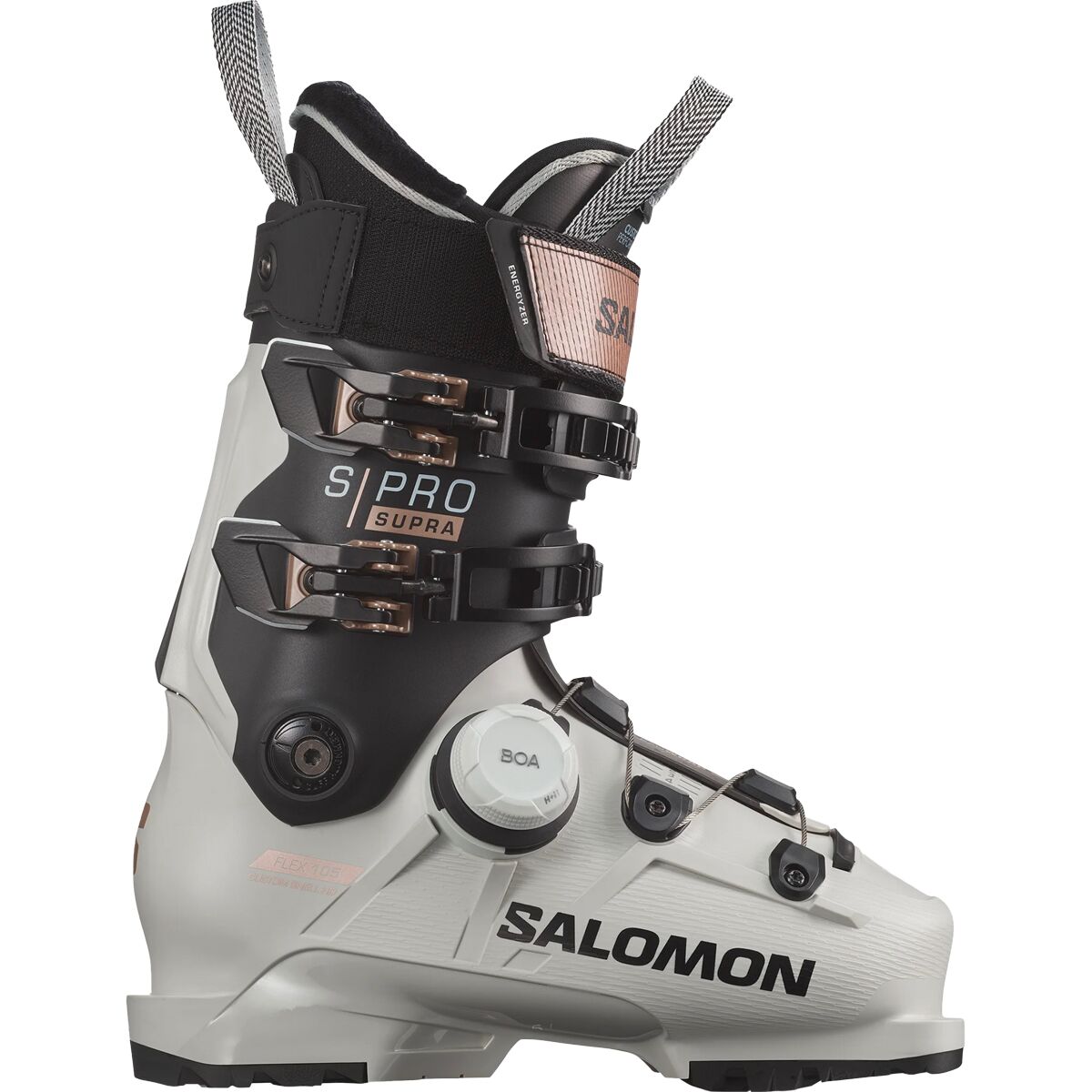
The S/Pro Supra Boa combines a 100mm last with Salomon’s BOA closure system. The dial-based lower closure distributes pressure evenly around your forefoot, eliminating the hot spots that traditional buckles create on wide feet.
Why it works for wide feet: The BOA system lets you fine-tune fit without creating pressure points. The 105 flex is versatile enough for all-mountain skiing while the medium-high volume shell accommodates wider feet with slightly taller insteps.
Best Wide All-Mountain Ski Boots
High Volume (Wide Everywhere)
These boots work for skiers who need room across the forefoot AND have tall insteps and substantial calves. If you’ve struggled with boots that crush your forefoot, squeeze your instep, and cut into your calves, you need high volume.
Rossignol Hi-Speed 100 HV ($549.95)
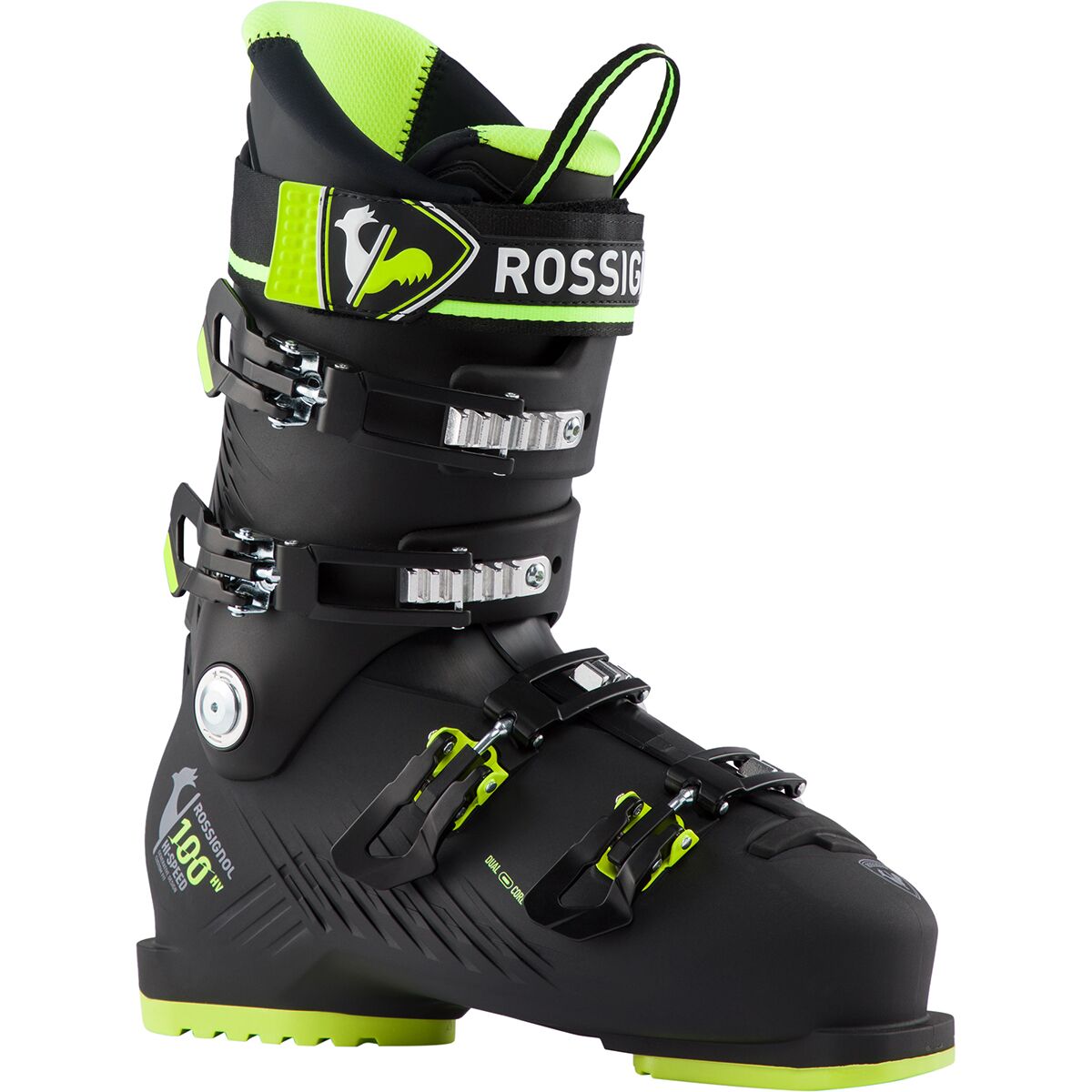
This boot delivers a genuine 102mm last with a 100 flex that’s approachable for intermediate skiers but still responsive enough for aggressive skiing. The HV (high volume) designation isn’t marketing fluff here: this boot was designed specifically for wider feet from the ground up, not stretched from a narrower mold.
Why it works for wide feet: The 102mm last provides room across the forefoot without excessive heel slop. The forgiving flex means you’re not fighting the boot all day, which reduces pressure points that develop from compensation patterns.
Salomon S/Pro HV 130 GW ($524.96)
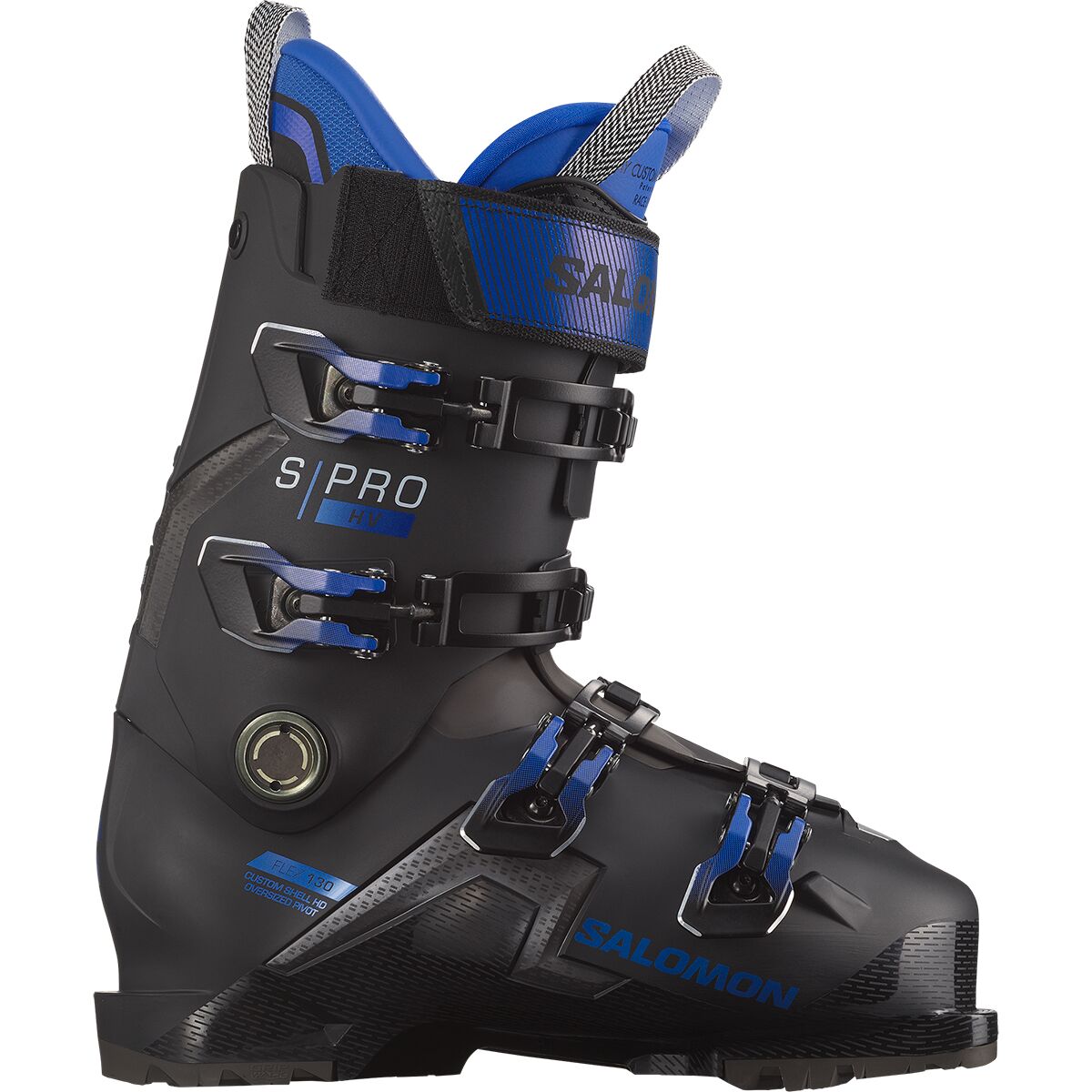
S/Pro performance meets high-volume comfort. The 102mm last provides genuine room for wider feet while the powerful 130 flex delivers the energy transfer advanced skiers demand. The CustomFit 3D Race liner molds to your specific foot shape.
Why it works for wide feet: The 102mm last accommodates wide forefeet without slop. The high-volume shell design provides extra room through the instep and calf, making this ideal for skiers who are wide everywhere, not just at the forefoot.
Tecnica Mach1 HV 130 ($849.99)
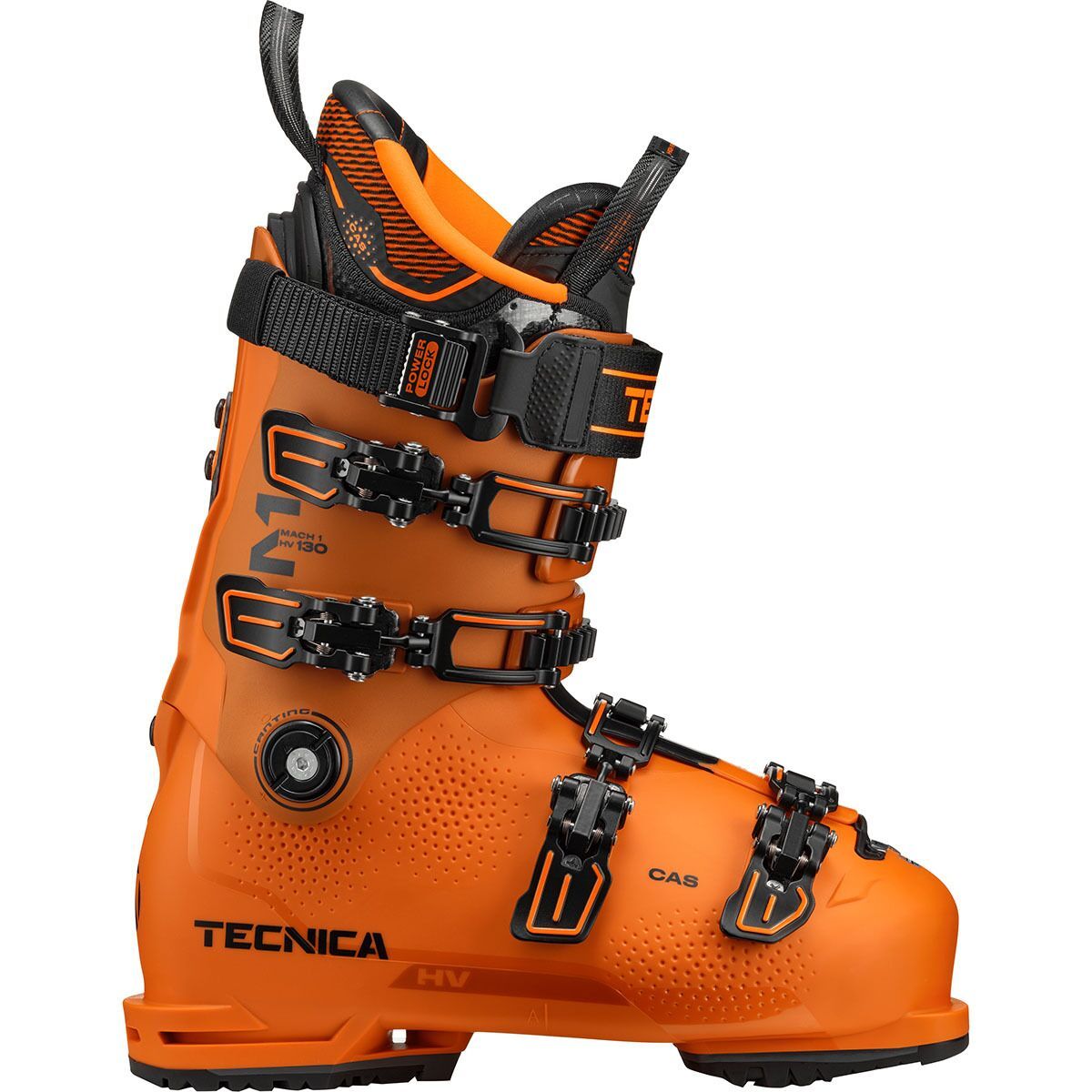
The Mach1 HV offers one of the widest fits available in alpine boots with its 103mm last. The C.A.S. shell is fully moldable, allowing bootfitters to customize fit even further if needed. The 130 flex provides serious performance for aggressive skiers.
Why it works for wide feet: The 103mm last is genuinely wide, not just “wide for a race boot.” The entire shell architecture is designed for high volume, with extra room through the instep and ankle. If you’ve been told you’re “too wide” for most boots, start here.
Medium Volume (Wide Forefoot, Controlled Instep)
These boots work for skiers with wider forefeet but average or lower insteps. If standard boots crush your toes but feel loose around your ankle, you probably need medium volume with a wider last.
Salomon S/Pro MV 120 GW ($419.97)
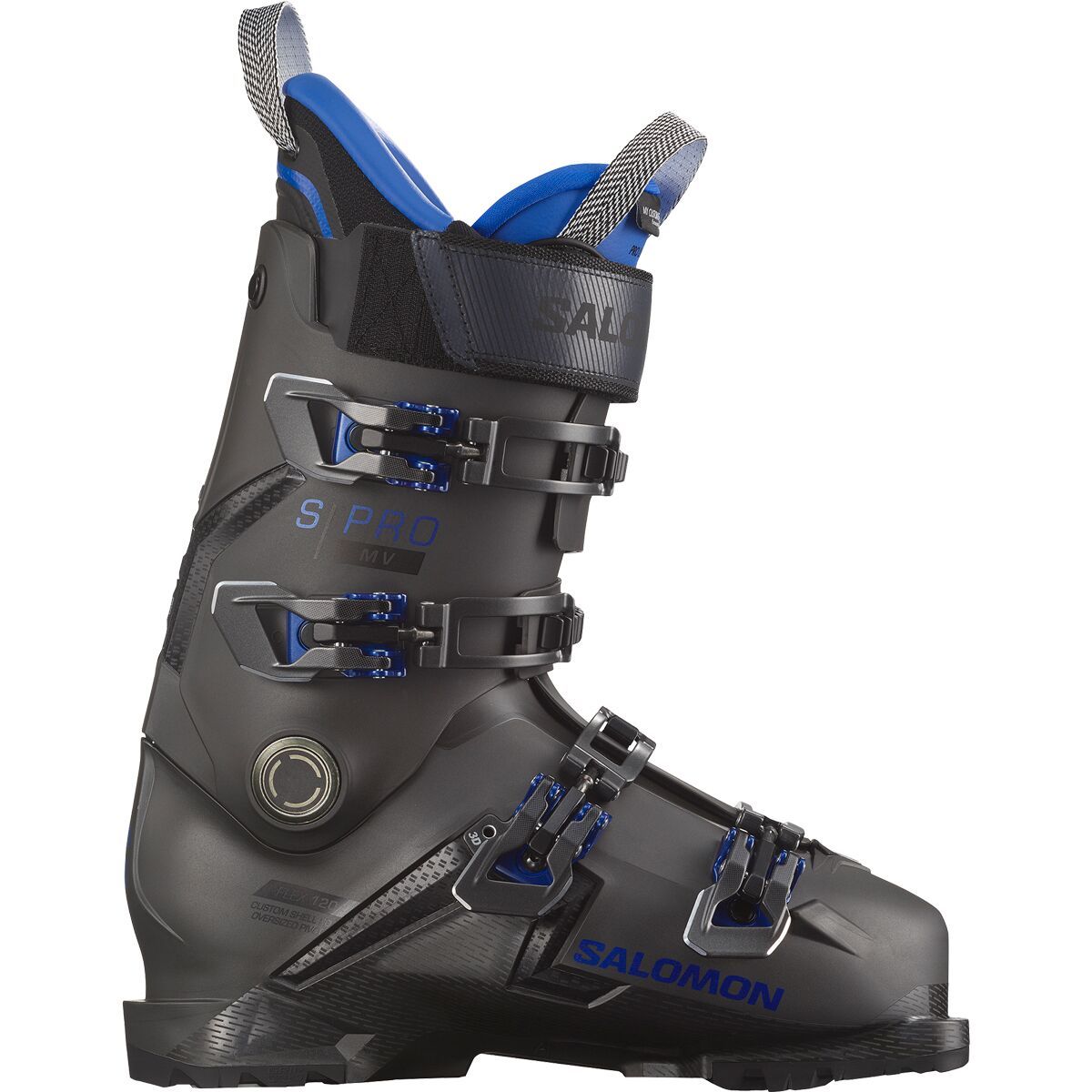
The S/Pro MV 120 hits the sweet spot for most advanced-intermediate skiers. The 100mm last provides room across the forefoot while the medium-volume shell keeps your heel and ankle locked down. The Custom Shell HD molds to your foot, and the 4D Pro liner eliminates pressure points.
Why it works for wide feet: The 100mm last gives you forefoot room without the looseness of a true high-volume boot. The controlled medium-volume fit means better heel retention and more precise energy transfer. This is the boot for skiers who need width but don’t need volume everywhere.
Atomic Hawx Prime 130 S Boa GW ($889.95)
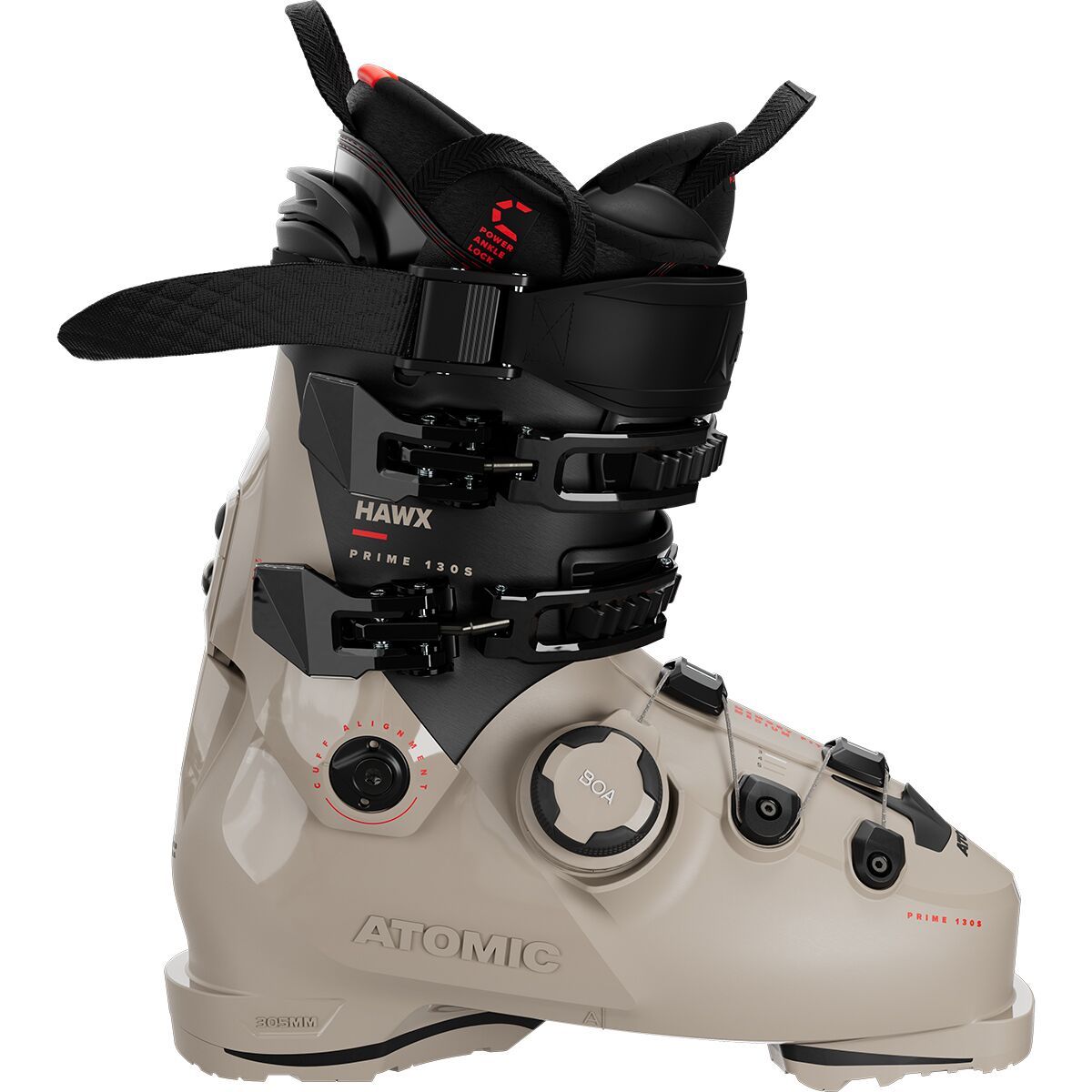
The Hawx Prime 130 S combines a 100mm last with Atomic’s BOA closure system. The dial-based lower closure wraps evenly around your forefoot, eliminating hot spots while the Mimic Platinum liner provides precision fit. The 130 flex delivers serious performance.
Why it works for wide feet: The 100mm last provides forefoot room, but this boot fits snugger than most 100mm options. The BOA closure system lets you fine-tune fit without creating pressure points. Ideal for skiers with wider forefeet who still want a precise, performance-oriented fit.
Low Volume (Wide Forefoot, Flat/Low Instep)
These boots work for skiers with wider forefeet but flat feet or low insteps. Standard “wide” boots feel sloppy on you because they have too much volume through the instep.
Salomon S/Pro Alpha 120 GW ($729.95)

The S/Pro Alpha 120 starts with a 98mm last but the shell can be heat-molded to expand the forefoot to effectively 100mm. The low-volume profile keeps your instep and heel locked down while the My Custom Fit 4D Race liner provides precision fit.
Why it works for wide feet: The 98mm base last can be expanded where you need it (forefoot) without adding volume where you don’t (instep, ankle). This is perfect for skiers with flat feet and wide forefeet who swim in traditional “wide” boots. The 120 flex provides serious performance without requiring you to fight the boot.
Wider Options in Touring Boots
Backcountry boots tend to run narrower than alpine boots, making wide options even more critical for uphill comfort.
Dynafit Radical Alpine Touring Boot ($749.95)
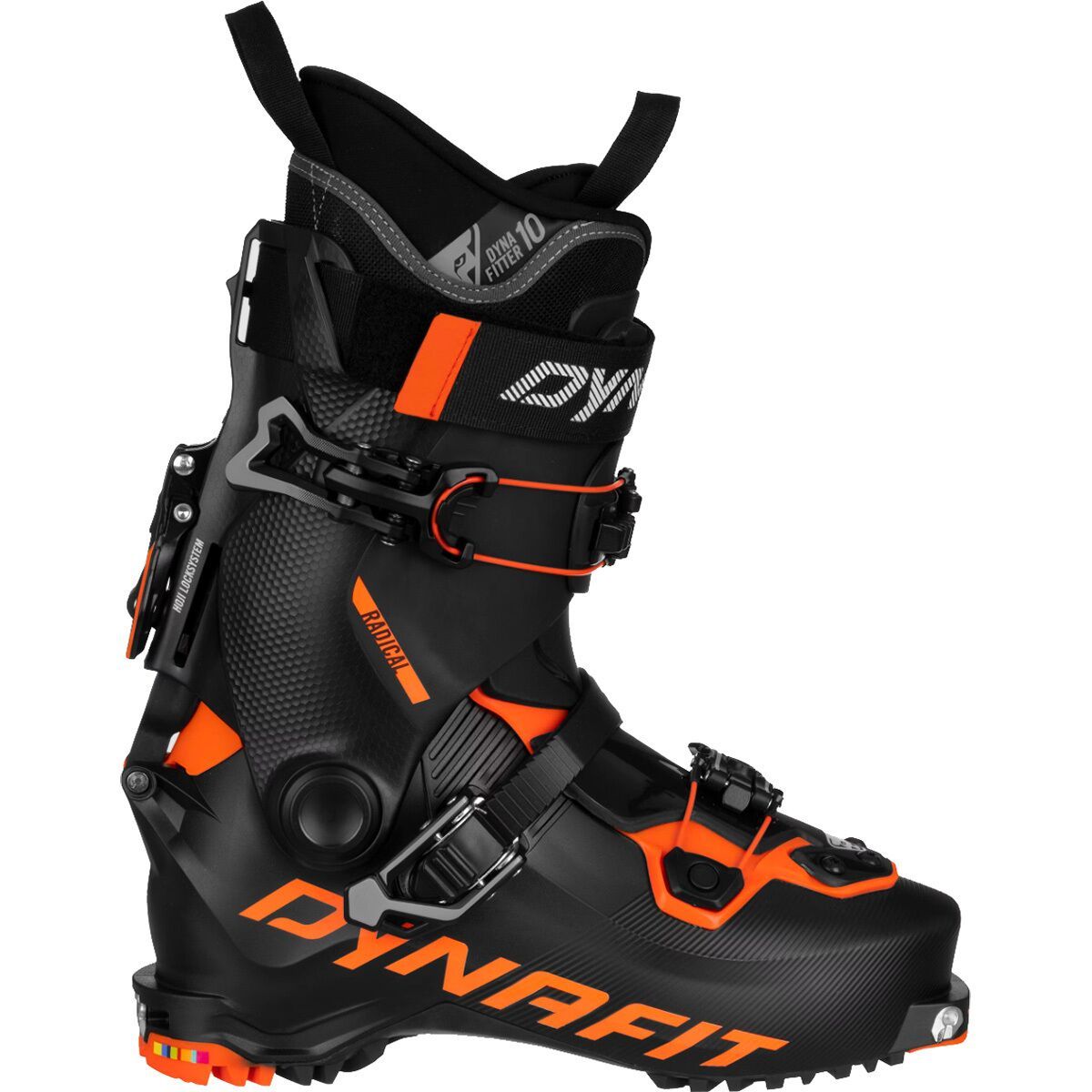
With a 103.5mm last, the Dynafit Radical offers one of the widest fits in the touring boot category. If you’ve struggled to find AT boots that don’t crush your feet on long approaches, this is worth serious consideration.
Why it works for wide feet: The extra-wide 103.5mm forefoot accommodates feet that have been squeezed by other touring boots. The 110 flex provides decent downhill performance without requiring a death grip on your foot. Combined with the 60° range of motion in walk mode, wide-footed tourers finally have an option that doesn’t require suffering.
Dynafit TLT X ($499.95)
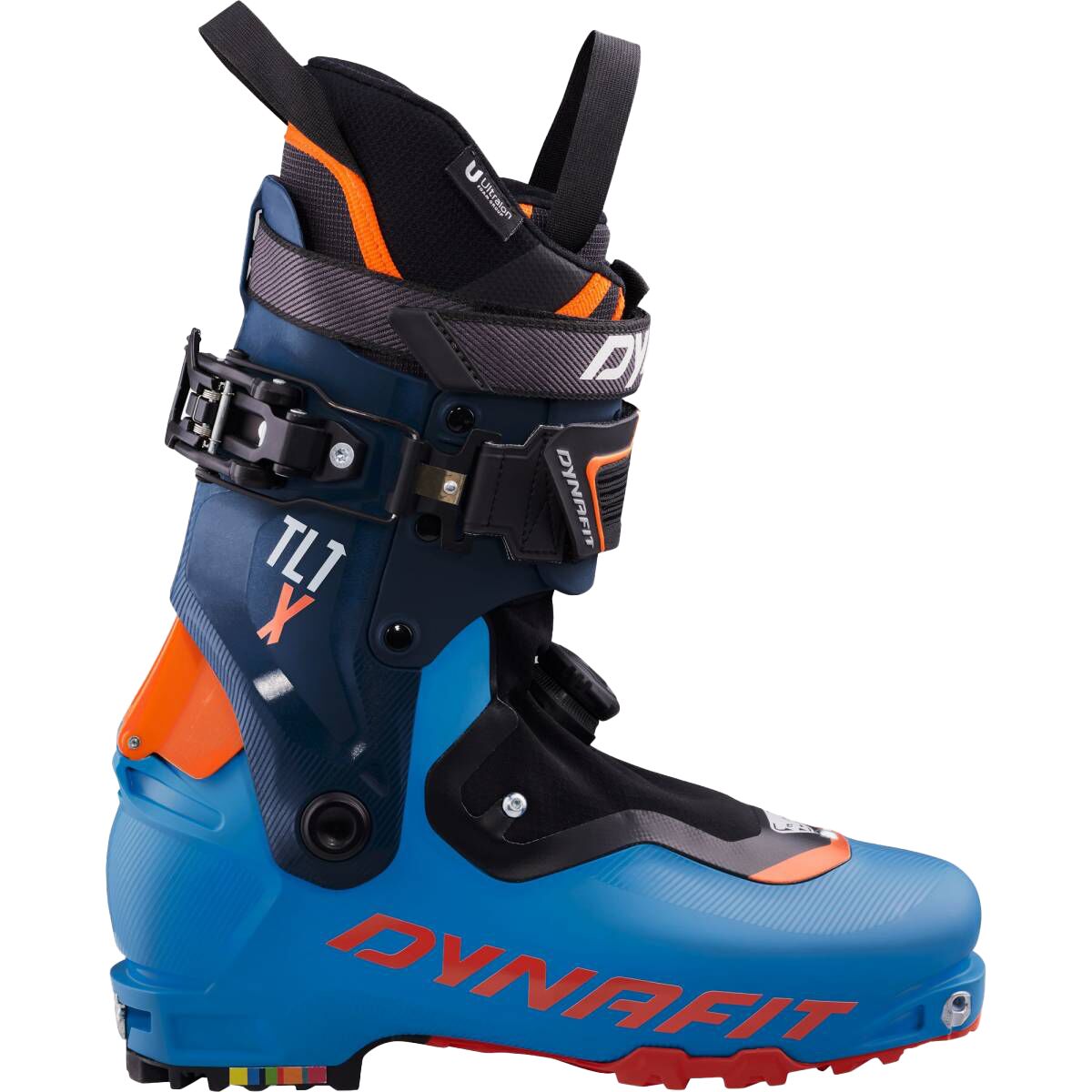
The TLT X offers a 101mm last in a lightweight touring package. While not as wide as the Radical, it hits the sweet spot for skiers who need more room than standard touring boots offer but don’t require extreme width.
Why it works for wide feet: The relaxed 101mm last eliminates the forefoot crush that plagues narrower touring boots. The dial closure system allows micro-adjustments that can accommodate swelling during long days without completely unlocking the boot.
Understanding Your Options: Width vs. Volume
Width and volume trip up a lot of wide-footed skiers. You might need one, the other, or both. They’re related but not identical.
A wide foot needs room across the forefoot (higher last number). A high-volume foot needs room everywhere: tall instep, thick ankle, and substantial calf. Many boots marketed as “wide” are actually “high volume,” meaning they’re roomier throughout but might still pinch at the forefoot if that’s your specific issue.
Brands handle this differently. Some use HV, MV, and LV explicitly in the model name to indicate High, Medium, or Low Volume (Tecnica, Lange, Head, Rossignol) while others use branded model line names to indicate volume.
The Custom Insole Factor
Your insole matters more than you think, and wide-footed skiers routinely overlook it. The stock insoles in most ski boots are flat, generic, and do nothing to support your foot. When your arch collapses, your foot spreads, and that spreading makes width problems worse.
I deal with this myself. My arch collapses under pressure, which splays the ball of my foot out wider. Without my custom insole, my feet need boots several mm wider just to accommodate that unsupported, splayed foot.
A properly fitted custom insole can actually make your foot slightly narrower by supporting your arch and preventing that spread. This doesn’t mean you can fit into a narrow boot, but it might mean the difference between a 102mm and 104mm last requirement.
Before assuming you need the widest boot available, consider whether arch support might be part of the solution. This is another reason why comprehensive foot assessment beats guessing: understanding your arch height and flexibility affects which boots will work.
Shell Modification: When Width Isn’t Enough
For some feet, even the widest production boots don’t provide enough room. Skilled bootfitters can punch or grind the shell to create additional space in problem areas. This is precision work that requires knowing exactly where your pressure points occur.
But you need to identify those pressure points first. Buying online without knowing your exact fit issues means you can’t tell a bootfitter what to fix. This is another area where detailed foot measurements help: if you know you have a prominent sixth metatarsal head or an unusually wide forefoot, you can communicate that to whoever does your modifications.
How to Know What You Need
The challenge with wide feet is that “wide” is relative. You might need a 101mm last, a 103mm last, or something in between. You might need width at the forefoot but not the heel. You might need high volume with average width.
Getting this wrong means expensive returns, wasted time, or worse, a boot that doesn’t quite fit but seems close enough so you ski on it anyway (and hate every minute).
If you can visit a quality bootfitter in person, that’s still the gold standard. They can look at your feet, watch how you stand and flex, and put you in shell-check mode to see exactly where problems occur.
If that’s not an option, digital fitting technology has advanced significantly. Wayfinder’s scanning process translates data into recommendations for boots that match your actual measurements, not just generic advice to “try a wide boot.”
Key Takeaways
Width in ski boots is measured by the last (in mm), but two boots with the same last can fit differently due to shell shape and liner construction. Signs you need a wide boot include little toe pressure, forefoot numbness, and a history of needing wide street shoes.
Understanding volume is as important as understanding width: you might need high volume (wide everywhere), medium volume (wide forefoot with controlled instep), or low volume (wide forefoot with flat feet).
Understanding your actual foot dimensions, whether through in-person fitting or digital scanning, prevents the expensive trial-and-error cycle that frustrates wide-footed skiers every season. The real goal is a boot that fits well enough to ski your best, not just one that stops hurting.
Related Reading
- Ski Boot Binding Compatibility Guide
- Women’s Ski Boots: What’s Actually Different
- Ski Boot Flex Explained
- Best Ski Boots 2025/2026
- Ski Boot Mondo Sizing Guide
- Complete Anatomy of a Ski Boot
- How to Break In New Ski Boots
- What Is a Ski Boot Last? Understanding Width and Fit
- How Tight Should Ski Boots Be?
- Ski Boot Liners Explained: Stock, Heat-Moldable, and Custom Options
Your Digital Ski Bootfitter
Ready to find boots that actually fit?
Wayfinder scans your feet with millimeter accuracy and matches you to boots from Atomic, Tecnica, Salomon, Nordica, and more. No appointment needed.
✓ 5 minutes
✓ Just your phone
✓ Millimeter accuracy
FAQ
In ski boots, a 101mm to 102mm last is considered wide and 103mm or above is extra wide, measured across the forefoot. For reference, 97mm to 98mm is narrow and 99mm to 100mm is the medium range most boots target. But two boots with identical last numbers can fit completely differently, because shell shape, instep height, toe box volume, and liner thickness all affect how roomy a boot actually feels. Width alone never tells the whole story.
The reliable signs: your little toe constantly presses against the shell and creates numbness or a hot spot, your forefoot goes numb within the first few runs even with buckles loosened, you already do well in wide or EE street shoes, or your traced foot measures 10cm or more across at a size 27 mondo. Heel lift, top-of-foot pain, and shin pain point to other fit issues, not width. Plenty of skiers blame width when the real problem lives elsewhere.
Sometimes, with modification. A bootfitter can stretch, punch, or grind a narrower shell to fit, though that can compromise the manufacturer’s intended performance characteristics. A better first step is arch support: if your arch collapses under pressure, your forefoot splays wider, and a proper insole can reduce the width you actually need, sometimes the difference between a 104mm and a 102mm last. If the signs point to genuinely wide feet, though, buy a genuinely wide boot.
Width is room across the forefoot; volume is room everywhere, including the instep, ankle, and calf. Many boots marketed as wide are really high volume, roomier throughout but potentially still pinching at the forefoot. You might need high volume (wide everywhere), medium volume (wide forefoot, controlled instep), or low volume (wide forefoot with a flat foot or low instep). Some brands, including Tecnica, Lange, Head, and Rossignol, flag this with HV, MV, and LV in the model name.
It depends on your volume needs. For wide-everywhere feet, the Tecnica Mach1 HV runs a genuinely wide 103mm last, with the Rossignol Hi-Speed 100 HV and Salomon S/Pro HV 130 at 102mm. For a wide forefoot with a controlled instep, the Salomon S/Pro MV 120 hits the sweet spot. For wide forefeet with flat, low insteps, the S/Pro Alpha 120’s 98mm shell can be heat-expanded at the forefoot only. Touring skiers should look at the Dynafit Radical at 103.5mm.
Often, yes, and wide-footed skiers routinely overlook them. Stock insoles in most ski boots are flat and generic, and when your arch collapses under load your foot spreads wider, making width problems worse. A properly fitted custom insole supports the arch and prevents that spread, which can make your foot effectively slightly narrower. It will not squeeze a wide foot into a narrow boot, but it can shift which last width you actually need.